95% code.
5% AI.
Most tools that build AI agents run a language model on every step. We build the other way around. If a task can be handled by tested code, we write code - so the work runs the same way every time and doesn't burn a fresh stack of tokens on every run. The model helps figure out what you need. The code does the work.
You describe it in plain language. We build it in code.
You never touch code, and you never should. You tell Uplift the routine in plain words. Behind that sentence, our team builds real, tested software - not a chain of prompts crossing its fingers. The simple part is yours. The engineering is ours.

"Pull the daily export, clean out the duplicates, and email me the summary at 9."
One sentence, in plain words. That's the whole job on your side.

- 01Fetch the export on a schedule
- 02Validate and de-duplicate the rows in code
- 03Format the summary
- 04Send the email, log the run
Real code, tested and version-controlled. Runs the same way every time.
AI for the parts that are fuzzy. Code for everything else.
A language model is great at the human parts - reading a messy email, sorting which request is which, drafting a reply in your voice. We use it exactly there, and nowhere it doesn't need to be.
Everything that can be pinned down becomes code: the steps, the rules, the math, the way data moves between your tools. Code is deterministic - same input, same output, every run. A model is probabilistic - it can answer the same question two ways. For the work you trust an agent to do alone, you want the part that behaves the same way every time.
Two things you feel right away: it's reliable, and it's cheap to run.

Reliability
Deterministic code that passed QA.
Every Uplift agent is real code, built and tested by our team and validated in a sandbox before it goes live. Code that passed review runs the same way every time. Nothing quietly changes its mind between Monday and Tuesday.

Economics
Cost that doesn't punish use.
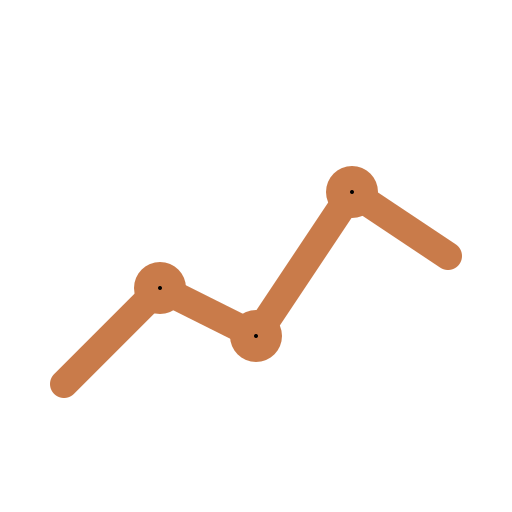
Code doesn't fire an AI model on every run, so the bill doesn't climb when the agent works harder. Run it ten times or ten thousand and the cost barely moves. You pay per automation - not per token, per seat, or per task.
Illustrative - the shape of the cost, not a price quote.
Most builders lean on the model. We lean on code.
We use AI where it's the right tool. And nowhere else.
This is not anti-AI. A model is the right tool for the fuzzy, human parts of a workflow - the plain-language requests and messy, unstructured input that no rulebook ever fully covers. We lean on it there, hard.
What we don't do is let a model run loose over the parts that need to be exact, or wire it into the hot path where it would run up tokens and drift. We wrap the AI in tested code that checks its work - so you get the upside without surprises in your output or your bill.
Questions about how we build.
Yes - deliberately. We use AI for the parts it's genuinely best at: understanding what you describe, reading messy input, and drafting language in your tone. For the rest - the steps, the rules, the math, the way data moves between your tools - we write tested code. On a typical agent it's roughly nine parts code to one part AI.
Stop being the middleman. Get an agent that does it for you.
Tell us the routine. We'll plan it, build it, and run it.
Questions? Read the FAQ on /pricing, or talk to us.